Club & Institute Union History

They do not have to be Working Men's Clubs, although most are. There are many village clubs, Royal British Legions, Labour Clubs, Liberal Clubs, and various other clubs involved. A member of one CIU-affiliated club is entitled to use the facilities of all other CIU clubs, although they will only be entitled to vote in committee elections in clubs where they are full members.
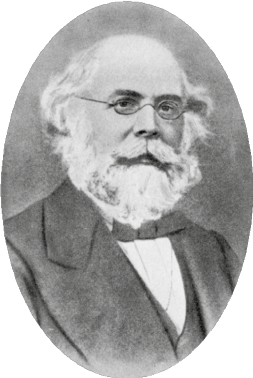
The Working Men’s Club & Institute Union was formed at a meeting on June 14, 1862 at Waterloo Place, London. We look back at the early days of the Union under its founding father, the Reverend Henry Solly
Having been founded in 1862, thus predating the FA Cup, the British Red Cross and the Coca-Cola Company, the Working Men’s Club & Institute Union (CIU) has been a force for good in local communities since the reign of Queen Victoria.
In his official history of the Union, Clubmen, published in 1987, George Tremlett wrote: “It was the clubs and institutes that gave working men somewhere to meet and relax once their day’s work was done; somewhere to develop hobbies and skills, from gardening to snooker, from darts to the breeding of racing pigeons; a place where they could perhaps, by taking part in the management of their clubs, make a real contribution to the communities in which they lived.”
And, save for the reference to ‘men’ – of course, women are now an intrinsic and much-valued part of life at CIU clubs – Tremlett’s description of the role of the Union’s clubs stands as true as ever now with an array of activities taking place in our clubs, up and down the land, seven days a week.
For the majority of club members, one of the key attractions of heading to a CIU club is the chance to enjoy a drink or two with like-minded people, something which is a far cry from the original vision of the CIU’s founding father, the famously teetotal Reverend Henry Solly.
A Unitarian minister, Solly was the driving force behind the formation of the Union as a way of establishing an attractive alternative to pubs as the venues of choice for the urban working class during their leisure time. For Solly, consuming alcohol, even in moderation, was not something to be encouraged.
In 1861, he and the Reverend David Thomas of Brixton set about trying to raise the sum of £3 million – the equivalent of about £380 million in purchasing power in today’s money – to establish a society that would build a national chain of working men’s clubs.
The venture was envisioned as a private venture but was later switched to a more philanthropic footing when the appeal for funds proved largely unsuccessful.
Thus it was, that on June 14, 1862, with the Lord Chancellor, Lord Brougham, chairing proceedings, that the Working Men’s Club and Institute Union was formed at the Law Amendment Society’s Rooms in Waterloo Place, London.
Speaking at the meeting were John Bainbridge, an upholsterer by trade and Mr Bebbington, a costermonger who had become Secretary of the Westminster Working Men’s Club.
A Council was elected at the meeting and the Reverend Solly and the Reverend J H Rylance were appointed as joint Honorary Secretaries of the new organisation.
Later that year, Solly became the Union’s first General Secretary with a salary of £200 a year and established the Union’s first offices at 150 The Strand.
Interestingly enough, one of Solly’s first actions was to install a bed in a back room so that he could catch up on sleep when working late hours at his desk.
He also wrote a manifesto outlining the Union’s aims which had some pretty forthright opinions on “intoxicating drinks”:
He wrote: “This Union is formed for the purpose of helping working men to establish Clubs or Institutes where they can meet for conversation, business and mental improvement, with the means of recreation and refreshment, free from intoxicating drinks; these clubs, at the same time, constituting societies for mutual helpfulness in various ways.
“It will be the aim of the Council of the Union to assist in extending or improving existing Associations which have in view objects of a kindred nature with the above as well as to promote the establishment of Clubs or Institutes where no such Associations may now be found.
“In order to consolidate and strengthen the action and mutual fellowship of the various Associations, Clubs or Institutes, the Council will invite them to become Registered Members of the Union.
“(In reference to the use of intoxicating drinks on the premises, the Council are strongly of the opinion that their introduction would be dangerous to the interests of these societies and earnestly recommend their exclusion. They make this recommendation simply on prudential grounds, the reasonableness of which, it is believed the Working Classes will be the first to acknowledge.)
“The Council also recommend that at least half of the managing body should be bona fide Working Men.”
At the end of the first year, Solly reported that the Union had been instrumental in forming 13 clubs; that 13 others had joined the Union: that 10 were in the process of formation under the Union’s guidance, and that another 17 had received advice or assistance from the Council.
Despite Solly’s clear bias against the sale of alcohol in Union clubs, the organisation had got off to a flying start.
Just three years later, in 1865, a Special Meeting of the Council was called on the temperance issue and it was agreed that there would no longer be any restriction on the sale of beer in member clubs, a decision that enabled clubs to flourish economically.
It was a decision which Solly accepted reluctantly and in his subsequent memoirs, These Eighty Years, Solly cited the example of a newly formed club in Leicester which had taken the decision to sell beer on the premises.
He wrote: “What was specially interesting to discover was the extent to which men, when they had got a club of their own, and felt responsible for its good name, were jealous of its credit and honour, and carefully guarded against any excess on their own part or that of their fellow members.”
The self-policing nature and the near-total absence of anti-social behaviour due to the over-indulgence of members of Union clubs is something which remains as true in 2022 as it was in 1865.As in the early days of the Union, the role of CIU clubs in promoting responsible drinking, civilised behaviour and community spirit is very much in evidence in modern-day Britain.
Of course, as the peerless Club Historian Dr Ruth Charrington points out, the history of the CIU shows a deep-rooted concern for the welfare of others amongst members.
She wrote: “The CIU has always had a caring side to its work, offering practical help for those who fall on hard times, not only among its members but also in the wider community.
“Even those in far-off countries feel the benefit of club members’ generosity and fund-raising activities. Clubs have always provided much more than recreational pursuits, entertainment and places to socialise in, though these are all very important.
“When the CIU was first established, there was no Welfare State — that didn’t appear until 1945. If you got ill or needed hospital treatment, there was no sick pay and very little help on offer. Men who had accidents ¬– as many did since there was no Health and Safety at Work legislation – had to do the best they could or lose their jobs.
“The CIU, however, wanted to do something positive and practical for club members who suffered sickness or injury. With scant state provision, it set out to promote mutual self-help and benevolent causes. “Long before the NHS came along, club convalescent homes were opened so that those who had been unfortunate enough to experience sickness had somewhere to recuperate.”
The homes may now have gone but the caring spirit of the CIU lives on.
A dispute at Wakefield City Working Men’s Club in 1978 led to a national campaign for equal membership rights for women at the CIU.
Sheila Capstick had been a regular snooker player at the club before an official introduced a ban on women playing snooker.
“A bloke came in and said he was going to have women stopped from playing snooker,” she recalled later. “The next thing, a sign went up banning women from playing. I complained to the Committee but nothing happened.”
Feeling aggrieved, Sheila started up a petition to overturn the ban and even organised a picket line outside the club.
The campaign, “A Woman’s Right to Cues,” escalated, and broadened into a demand for equal rights for women in all working men’s clubs, and for full membership rights within the CIU.
This wider campaign was named ERICCA – Equal Rights in Clubs Campaign for Action – which began to lobby members outside the CIU's Annual Meeting in Blackpool, where delegates from progressive clubs proposed resolutions supporting equal rights in clubs.
Eventually, after all this activity, a resolution granting women equal members’ rights in the CIU was passed at the AGM in April 2007, although women had been allowed to become full members of CIU club for a decade before that decision.
It meant that women members could now use Pass Cards in their own right and visit any of the CIU’s affiliated clubs.
Just four years later, in 2011, Carol Goddard became the first female member of the Union’s NEC before stepping down from the role in December 2021.
In 2023, at the Union's AGM in Blackpool, the name of the organisation was changed from the Working Men's Club & Institute Union to the Club & Institute Union.
The CIU first launched its own publication in 1864, entitled The Working Men’s Club and Institute Magazine.
Costing threepence per issue, this forerunner of the current Club Journal was discontinued in October 1865.
Some 10 years later, the CIU Council voted to re-launch their own publication and on May 15th, 1875, The Workmen’s Club Journal and Official Gazette of the Workingmen’s Club and Institute Union was published for the first time.
Publication was suspended in 1878 but in 1883 came the Club and Institute Journal under the Editorship of Council Member Mark Judge.
Then, in July 1894, came the first issue of Club Journal with the Secretary of the Union acting as Editor.
The new publication was instrumental in raising money for the Union’s Convalescent Homes Fund with a halfpenny for every issue of the magazine sold going to the Fund.
In the mid-1980s, the CIU, under the leadership of President Derek Dormer OBE, took the lead in establishing the All-Party Parliamentary Group for Non-Profit Making Members’ Clubs alongside several other club associations.
The first meeting was held in 1983, attended by 50 MPs and two members of the House of Lords and has continued at regular intervals ever since in a forum which allows CIU officials to address parliamentarians directly on the legislation affecting the operation of members’ clubs.
The Union is also a founder member of the Committee of Registered Clubs Associations (CORCA) which aims to find common ground between various members’ club associations and represent those views to the Government and other national bodies involved with clubs.
1862 CIU established by Reverend Henry Solly in London
1893 CIU opens new office in Clerkenwell Road, London
1894 Former CIU President Lord Rosebery becomes Prime Minister
1894 First convalescent home opens at Pegwell Bay, Kent
1934 Club Management Diploma (CMD) introduced
1962 100th anniversary celebrated with opening of brand-new Head Office in London
1977 Queen Elizabeth II becomes the first reigning monarch to step inside a CIU club when she visits Coventry WMC with Prince Philip
2007 Annual General Meeting in Blackpool votes to allow women to buy Pass Cards
2011 Carol Goddard becomes first woman elected to NEC
2018 Award in Club Management introduced
2022 CIU celebrates 160th anniversary

CIU Clubs around the UK
Find a Club near to you or search by Branch area
Just enter the nearest town/city to see the Clubs' location and address
PLEASE READ THE INSTRUCTIONS BELOW TO USE THE MAP FUNCTION





